What Causes Hammertoes? The 3 Main Biomechanical Reasons Explained
Hammertoes don’t just “happen.”
If your toe is starting to curl, bend, or press against your shoe, there’s almost always an underlying mechanical cause and understanding it is key to proper treatment.
In this part of Dr. Sam’s hammertoe series, we’re breaking down the three primary causes of hammertoes and what they mean for your feet long-term.
Quick Answer: What Causes Hammertoes?
Hammertoes are most commonly caused by muscle and tendon imbalances in the foot, typically due to:
Flexor stabilization (most common; seen in flat feet)
Extensor substitution (seen in high arches or gait abnormalities)
Flexor substitution (less common; associated with Achilles weakness)
These imbalances cause the toes to bend abnormally over time, eventually leading to a fixed deformity.
Understanding the Mechanics Behind Hammertoes
Your toes are controlled by a complex system of:
Flexor tendons (bottom of the foot)
Extensor tendons (top of the foot)
Intrinsic foot muscles
Stabilizers like the plantar plate
When one group overpowers another, the toe begins to bend, and over time, that bend can become permanent. According to the American Orthopaedic Foot & Ankle Society, hammertoes often develop due to imbalance between muscles and tendons that control toe position.
The 3 Main Causes of Hammertoes
1. Flexor Stabilization (Most Common Cause)
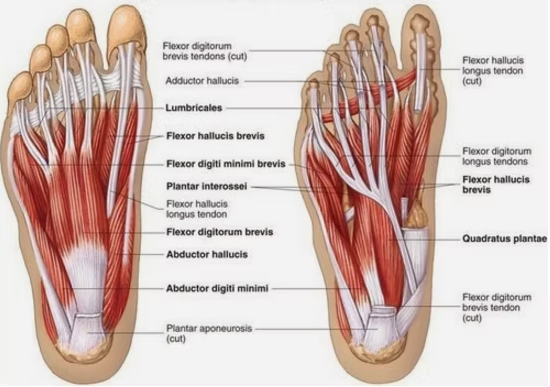
This is the #1 cause of hammertoes, especially in people with:
Flat feet
Overpronation
Poor foot stability
What’s happening?
The long flexor tendons (running from your calf to your toes) begin to:
Grip the ground
Stabilize your foot during walking
Compensate for weak intrinsic foot muscles
Over time, these tendons overwork and overpower the smaller stabilizing muscles.
Result: The toes begin to curl downward → hammertoe develops
This mechanism is commonly seen in pronated foot types, where stability is compromised.
2. Extensor Substitution
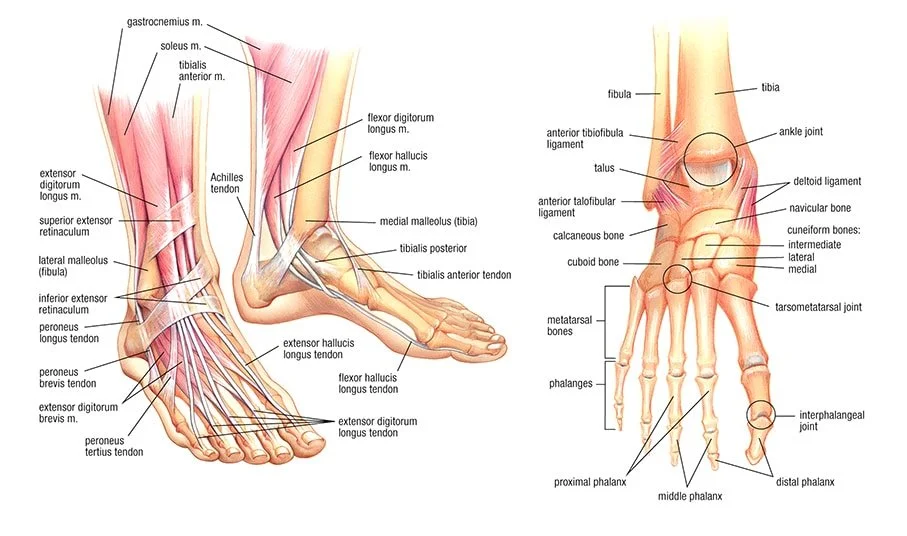
This is essentially the opposite problem. Instead of the bottom tendons taking over, the top tendons (extensors) dominate.
What’s happening?
During walking, specifically the swing phase of gait, the extensors:
Lift the foot off the ground
Pull the toes upward
When they become overactive, they:
Pull the toes upward at the base (MTP joint)
Create a compensatory bend in the middle joints
Result: Toe lifts up, then buckles → hammertoe forms
Who is at risk?
People with high arches (cavus feet)
Individuals with neuromuscular conditions
The American Academy of Orthopaedic Surgeons notes that abnormal foot mechanics and muscle imbalance are key contributors to hammertoe formation.
3. Flexor Substitution (Least Common)
This is the least common but still important.
What’s happening?
When the Achilles tendon is weak or ineffective:
It cannot properly plantarflex the foot (point the foot downward)
The long toe flexors step in to compensate
Now those flexors are doing two jobs:
Stabilizing the foot
Replacing the Achilles function
Result: Overload → toe curling → hammertoe
Why Hammertoes Get Worse Over Time
Here’s the critical takeaway: Hammertoes are not just a toe problem. They’re a long-term biomechanical issue.
Over time:
Tendons tighten
Joints stiffen
Deformity becomes fixed
According to the Mayo Clinic, untreated hammertoes can become rigid and increasingly painful, especially with shoe pressure.
When It’s “Too Late” for Simple Treatment
By the time many patients seek care, the toe is:
Rigid
Painful
Causing corns or calluses
Affecting walking
At this stage, conservative care may not fully correct the issue, and surgical options may be considered.
How to Prevent Hammertoes from Progressing
Early intervention matters. To reduce progression risk:
Wear shoes with a wide toe box
Avoid tight or high-heeled footwear
Address flat feet or high arches with support
Treat muscle imbalances early
Seek evaluation when symptoms begin
Hammertoe Treatment in Columbus, Ohio
If you're experiencing:
Toe pain
Bent or curling toes
Difficulty wearing shoes
Corns or pressure points
It’s worth getting evaluated early. At AM Physicians, Dr. Sam assesses:
Foot structure (flat vs high arch)
Tendon balance
Gait mechanics
Flexibility vs rigidity
This allows for targeted treatment based on the cause, not just the symptom.
Hammertoe FAQ
What is the most common cause of hammertoes?
The most common cause is flexor stabilization, where overactive flexor tendons compensate for foot instability, especially in flat feet.
Can hammertoes be reversed?
Flexible hammertoes may be managed conservatively, but rigid hammertoes typically require surgical correction.
Do hammertoes mean something is wrong with my foot mechanics?
Yes. Hammertoes are usually a sign of underlying biomechanical imbalance, not just a toe issue.
Are hammertoes preventable?
In many cases, early intervention with proper footwear and support can slow or prevent progression.
Related Articles in this Series
References
American Orthopaedic Foot & Ankle Society – Hammer Toe
American Academy of Orthopaedic Surgeons – Hammer Toe and Claw Toe
Mayo Clinic – Hammertoe and Mallet Toe
