Hammertoe Surgery Explained: Tendon Transfers vs Fusion (What You Need to Know)
Hammertoes don’t just look different. They behave differently depending on how long they’ve been there. In this part of Dr. Sam’s hammertoe series, we’re breaking down the real surgical options for hammertoes and, more importantly, when each one actually makes sense.
Quick Answer: What Is the Best Surgery for Hammertoes?
The best hammertoe surgery depends on whether the toe is:
Flexible → treated with tendon transfer
Rigid → treated with joint removal (arthroplasty) or fusion (arthrodesis)
In most cases, arthrodesis (fusion) is the most common and reliable procedure for long-term correction.
Why Hammertoe Surgery Is Sometimes Necessary
As discussed in earlier parts of this series, hammertoes are caused by muscle and tendon imbalances.
Over time:
Tendons tighten
Joints stiffen
The deformity becomes fixed
According to the American Academy of Orthopaedic Surgeons, hammertoes that become rigid often require surgical correction when conservative treatments fail.
Flexible vs Rigid Hammertoes: The Key Decision Point
Flexible Hammertoe
Can still be straightened manually
Tendons are the primary issue
Joint is not locked
Can be treated with tendon procedures
Rigid Hammertoe
Cannot be straightened
Joint is stiff or “locked”
Structural deformity is established
Requires bone/joint procedures
Surgical Options for Hammertoes
1. Tendon Transfer (For Flexible Hammertoes)
This procedure addresses the root cause: muscle imbalance.
How it works:
A tendon that is pulling the toe abnormally is repositioned
It is redirected to create a more balanced pull
This helps straighten the toe dynamically
Best for:
Early-stage hammertoes
Flexible deformities
The American Orthopaedic Foot & Ankle Society notes that tendon balancing procedures can be effective when deformities are still flexible.
2. Arthroplasty (Joint Removal)
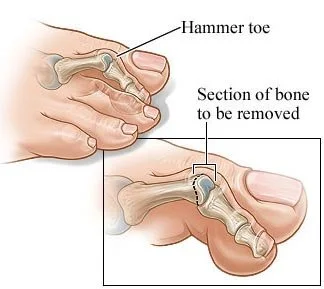
Used for more advanced cases.
How it works:
A portion of the joint (usually the PIP joint) is removed
This eliminates the rigid deformity
The toe is allowed to relax into a straighter position
Pros:
Less rigid than fusion
Preserves some motion
Cons:
Less structural stability than fusion
3. Arthrodesis (Fusion) – Most Common Option
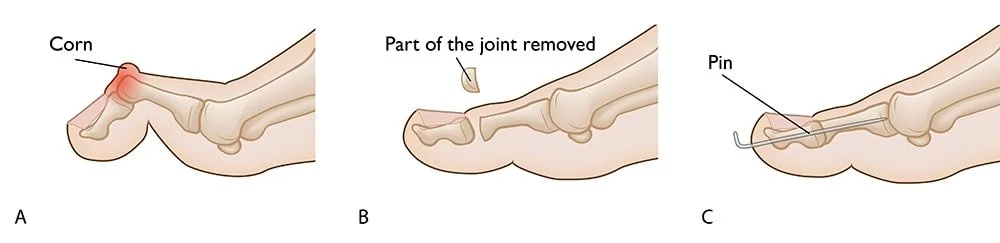
This is the most widely used and most predictable surgical correction.
How it works:
The joint surfaces are removed
The bones are aligned
The joint is permanently fused in a straight position
Why it’s preferred:
Strong, stable correction
Lower recurrence rates
Consistent outcomes
Clinical literature consistently supports fusion as a reliable long-term solution for rigid hammertoes.
How the Toe Is Held in Place After Surgery
Once the correction is made, the toe must be stabilized while it heals.
There are several methods:
1. K-Wire (Traditional Method)
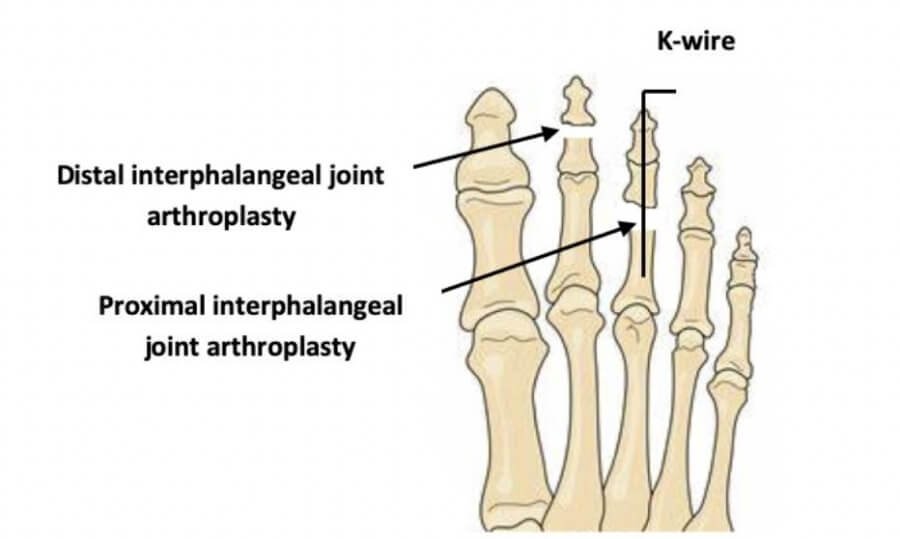
A thin wire placed through the toe
Temporarily holds alignment
Removed after healing begins
2. Internal Implants
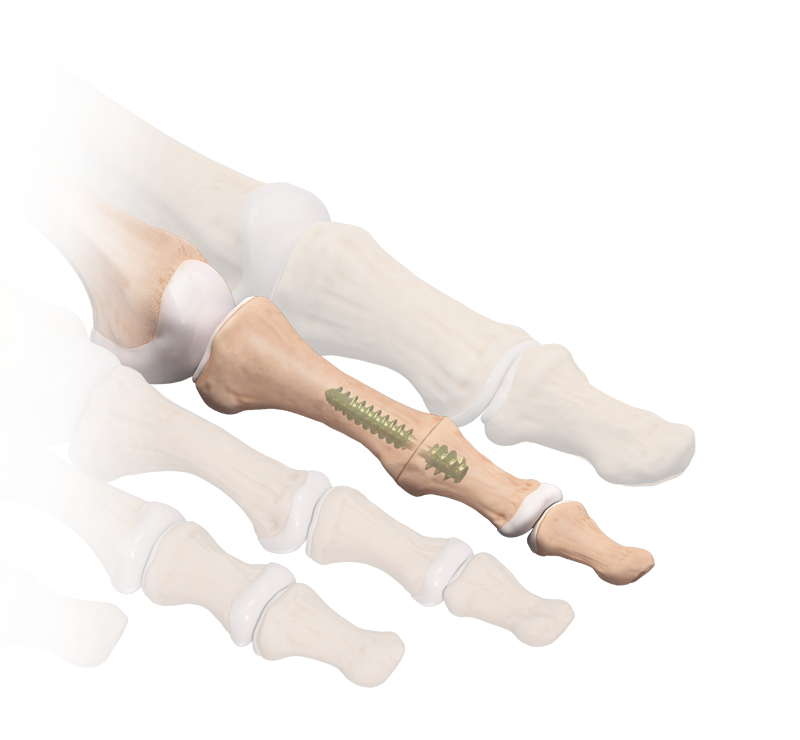
Small devices placed inside the bone
Provide internal stability
No external wire
3. External/Advanced Fixation Options
Devices placed around or within the bone
Designed for alignment and stability
Each option has pros and cons, and the choice depends on the patient and surgeon preference.
When Do You Actually Need Hammertoe Surgery?
You may be a candidate if you have:
Persistent pain despite conservative care
Rigid toe deformity
Corns or calluses that keep returning
Difficulty walking or wearing shoes
Progressive worsening
According to the Mayo Clinic, surgery is typically considered when non-surgical treatments fail to relieve symptoms.
Hammertoe Surgery in Columbus, Ohio
If you’re dealing with:
Painful hammertoes
Toe deformities affecting daily activity
Difficulty finding comfortable shoes
An evaluation is the next step. At AM Physicians, Dr. Sam evaluates:
Flexibility vs rigidity
Tendon balance
Foot structure
Gait mechanics
This allows for a customized surgical plan based on your specific condition, not just a one-size-fits-all approach.
Hammertoe Surgery FAQ
What is the most common hammertoe surgery?
Arthrodesis (fusion) is the most common procedure for rigid hammertoes.
How long does hammertoe surgery recovery take?
Initial healing typically takes several weeks, with full recovery varying based on the procedure.
Is hammertoe surgery permanent?
Fusion procedures are designed to be permanent corrections.
Related Articles in This Series
References
American Academy of Orthopaedic Surgeons – Hammer Toe and Claw Toe
American Orthopaedic Foot & Ankle Society – Hammertoe Treatment
Mayo Clinic – Hammertoe and Mallet Toe
