Can You Fix Flat Feet as an Adult? Understanding Arch Implants and Flatfoot Surgery
Sometimes the best medical conversations happen off the cuff. In a recent reel, Dr. Sam and his medical assistant were talking about flat feet when a surprising realization came up:
MA: “You’re telling me I could’ve got an implant when I was a child, and I could’ve had an arch right now?”
Dr. Sam: “Yeah.”
That moment opens the door to an important question many patients ask:
Can flat feet be fixed, and does age matter?
The short answer: yes, but the approach is very different for kids and adults.
What Is Flatfoot (Pes Planus)?
Flatfoot, or pes planus, occurs when the arch of the foot collapses or never fully forms. This can happen:
In childhood (often flexible and asymptomatic)
Over time in adults due to tendon dysfunction, injury, or biomechanics
Some people have flat feet without pain. Others develop:
Foot and ankle pain
Fatigue with walking
Knee, hip, or back pain
Progressive deformity
The most common adult form is adult-acquired flatfoot deformity (AAFD), often related to posterior tibial tendon dysfunction (PTTD).
Why Kids Can Get an Implant (and Adults Usually Don’t)
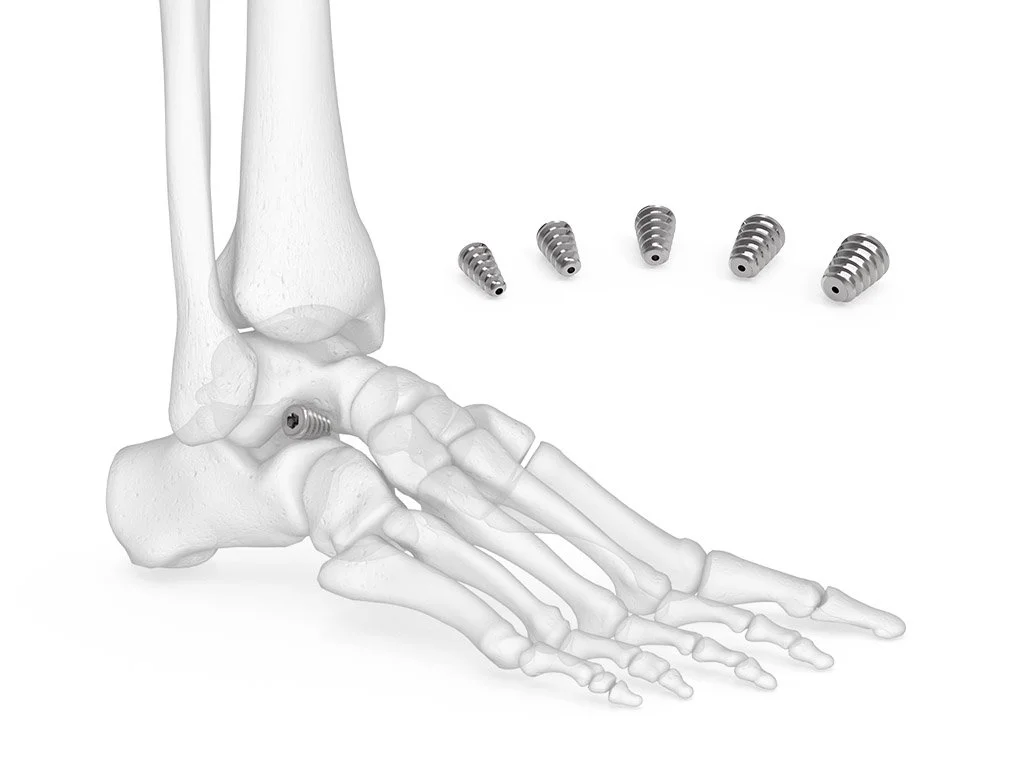
Arch Implants in Children
In pediatric patients, one option is a subtalar arthroereisis implant, a small device placed in the sinus tarsi that limits excessive pronation and helps support arch development.
These are often used in children because:
Bones are still growing and adaptable
The procedure is minimally invasive
It avoids cutting bone
Studies show that subtalar implants in children with flexible flatfoot can improve alignment and symptoms when carefully selected.
Why Adult Flatfoot Surgery Is Different
As Dr. Sam explains in the reel, adult flatfoot correction usually requires cutting bone.
Why?
Adult bones are no longer growing
Deformity is often more rigid
Tendons, ligaments, and joints may already be damaged
That’s why adult procedures focus on realigning the foot structurally, not just supporting it.
Two Common Surgical Options for Adult Flatfoot
Dr. Sam highlights two of the most commonly discussed procedures involving the calcaneus (heel bone).
1. Medial Displacement Calcaneal Osteotomy (MDCO)
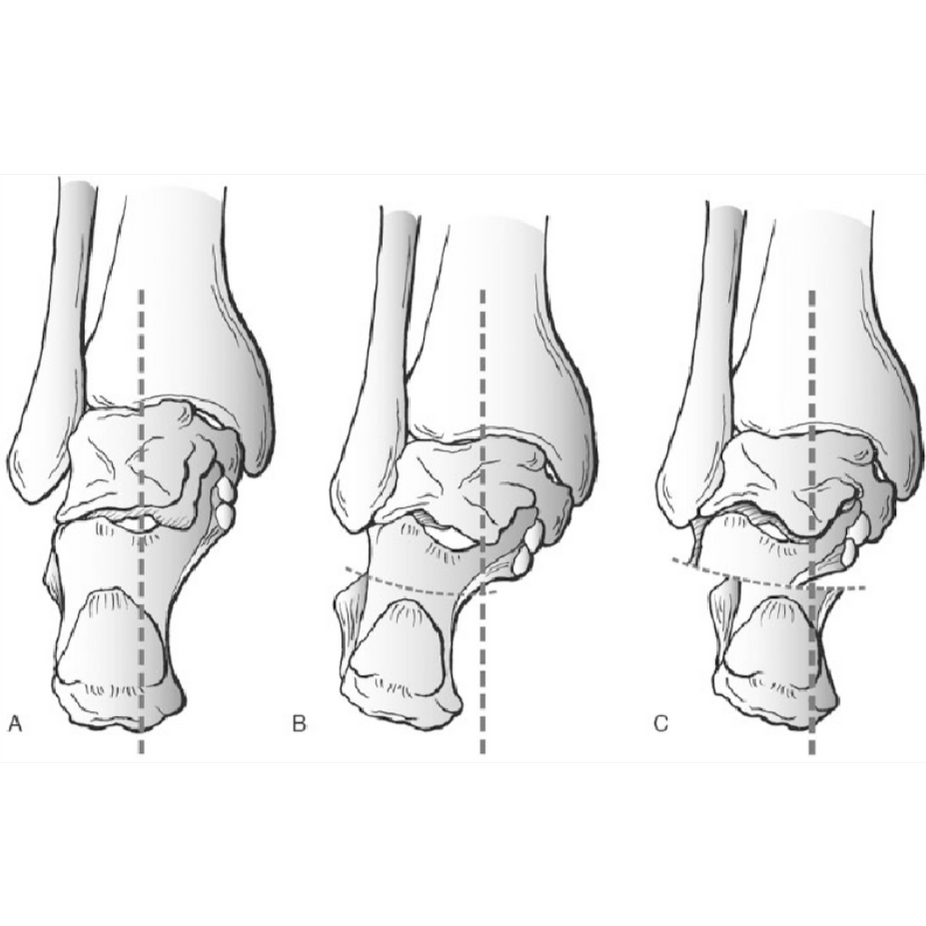
This procedure involves:
Cutting the heel bone
Shifting it medially (toward the inside)
Reattaching it in a corrected position
Goal:
Improve alignment and reduce strain on the arch-supporting structures.
While MDCO can be effective, research suggests that its ability to restore arch height alone is limited, especially in more severe flatfoot deformities.
2. Evans Osteotomy (Lateral Column Lengthening)
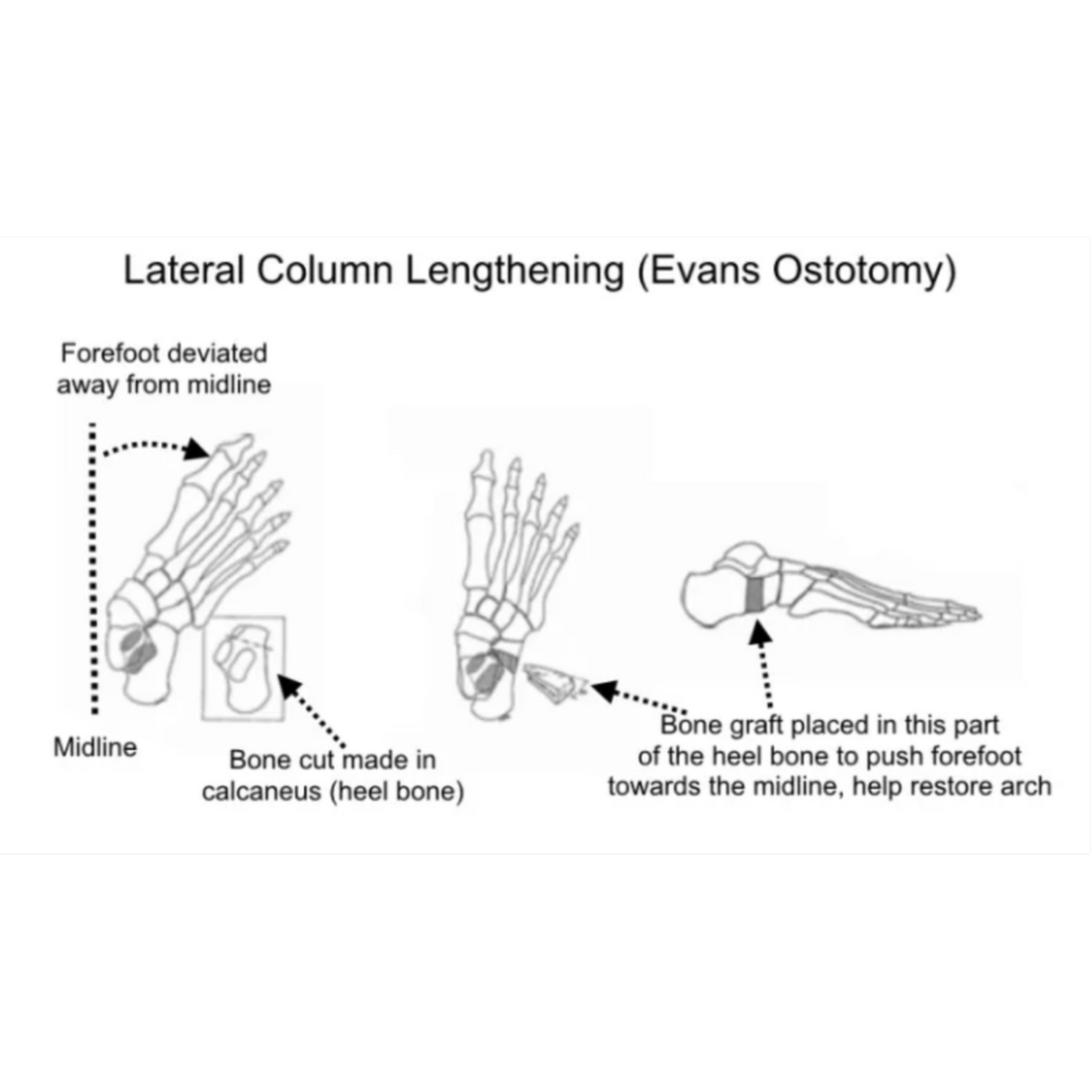
This is the procedure Dr. Sam says he “likes quite a bit.”
It involves:
Cutting the anterior portion of the calcaneus
Inserting a bone graft or wedge
Lengthening the lateral side of the foot
What it does biomechanically:
Corrects forefoot abduction
Restores medial arch height
Improves overall foot alignment
Multiple studies show that the Evans osteotomy has a stronger biomechanical impact on arch restoration compared to medial displacement alone.
As Dr. Sam notes, “If you really have no arch, it will definitely create it.”
Which Procedure Is “Better”?
There is no one-size-fits-all answer.
Many adult flatfoot reconstructions involve a combination of procedures, including:
Calcaneal osteotomies
Tendon repairs or transfers
Ligament reconstruction
Gastrocnemius or Achilles lengthening
However, literature supports that lateral column lengthening (Evans osteotomy) often provides greater correction of arch collapse and forefoot abduction than medial displacement alone.
Do All Flat Feet Need Surgery?
Absolutely not.
Most flatfoot patients are treated non-surgically, especially when addressed early:
Custom orthotics
Supportive footwear
Physical therapy
Activity modification
Surgery is typically considered when:
Pain persists despite conservative care
Deformity is progressive
Function is significantly limited
Bottom Line
Yes, flat feet can be corrected, even in adults.
But the approach depends on age, severity, flexibility, and symptoms.
Children may benefit from minimally invasive implants
Adults often require structural correction involving bone realignment
Procedures like the Evans osteotomy can significantly restore arch height and biomechanics in properly selected patients
If you have flat feet, pain, or concerns about your arch, you don’t have to guess what applies to you.
Come see us at AM Physicians. We’ll evaluate your foot structure, biomechanics, and symptoms, and walk you through the best options for your situation.
