What Is Equinus? Why Limited Ankle Motion Matters More Than You Think
If you’ve ever been told you have “tight calves” or a “tight Achilles,” you may actually be dealing with a condition called equinus, and it can have a much bigger impact on your feet and ankles than most people realize.
As Dr. Sam explains in the reel, equinus is not about flexibility for flexibility’s sake. It’s about how your foot moves when you walk and what happens when it can’t move the way it needs to.
What Is Equinus?
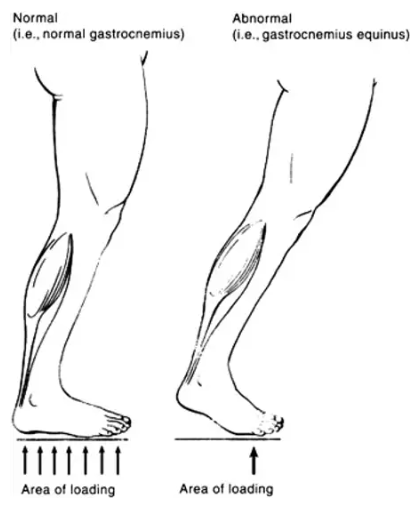
Equinus is defined as the inability of the ankle to dorsiflex (bend upward) at least 10 degrees past neutral (90 degrees) when the knee is straight.
90 degrees = your foot and leg form an “L” shape (neutral)
Normal walking requires at least 10 degrees of upward motion past that point
Less than 10 degrees = equinus
This upward motion (called ankle dorsiflexion) is essential for normal gait, balance, and shock absorption during walking and running.
Why 10 Degrees Matters
Ten degrees may not sound like much, but it’s non-negotiable for normal biomechanics.
Without adequate dorsiflexion, your body is forced to compensate. Those compensations increase stress on other structures in the foot and ankle, often leading to pain and injury over time.
Studies show that limited ankle dorsiflexion alters gait mechanics and increases plantar pressures, which can contribute to multiple foot pathologies.
The Most Common Cause: A Tight Achilles Tendon
As Dr. Sam points out, equinus is most often caused by a tight Achilles tendon or calf muscle complex (the gastrocnemius and soleus muscles).
When the Achilles is tight:
It restricts upward ankle motion
It pulls the heel upward prematurely during walking
It prevents the foot from reaching the required dorsiflexion range
This tightness may develop from:
Genetics
Long periods of sitting
Wearing shoes with elevated heels
Lack of stretching
Previous injury
Neurologic conditions
American College of Foot and Ankle Surgeons (ACFAS) literature identifies gastrocnemius–soleus tightness as one of the most underrecognized contributors to foot pathology.
Problems Commonly Linked to Equinus
Equinus doesn’t usually cause pain by itself. Instead, it creates a chain reaction.
Conditions commonly associated with equinus include:
Plantar fasciitis
Achilles tendinitis
Heel pain
Forefoot overload and metatarsalgia
Flatfoot deformity
Bunions and hammertoes
Recurrent ankle sprains
Diabetic foot ulcer risk due to increased plantar pressure
In patients with diabetes or neuropathy, equinus is especially concerning because it increases forefoot pressure, raising the risk of skin breakdown and ulcers.
How Is Equinus Diagnosed?
Diagnosis is typically made through:
A physical exam
Measuring ankle dorsiflexion with the knee straight and bent
Observing gait and foot posture
Imaging is not usually required. This is a functional diagnosis, best identified by a trained foot and ankle specialist.
What Can Be Done About Equinus?
The good news: equinus is treatable.
Treatment depends on severity and symptoms, but may include:
Targeted calf and Achilles stretching
Night splints
Custom orthotics
Physical therapy
Activity and footwear modification
In more severe or resistant cases, procedural or surgical options may be considered to restore functional motion and reduce long-term damage.
Why Early Treatment Matters
As Dr. Sam says:
“10 degrees isn’t a lot, but it’s needed and necessary. So if you can’t get there, we should do something about it.”
Ignoring equinus allows compensations to continue, and those compensations often lead to chronic pain, recurring injuries, and structural foot problems over time.
Addressing equinus early can:
Reduce pain
Improve walking mechanics
Prevent future injuries
Protect long-term foot health
Bottom Line
Equinus is a common, often overlooked condition defined by limited upward ankle motion most often caused by a tight Achilles tendon. While subtle, it plays a major role in foot and ankle health.
If you’ve been dealing with persistent foot pain, heel pain, Achilles issues, or recurrent injuries, equinus may be part of the puzzle.
If you’re unsure, come see us at AM Physicians. We’ll evaluate your motion, identify the cause, and help you get back to moving the way your body was designed to.
