Can You Roll Your Ankle Without Injury? Understanding Extreme Ankle Mobility
If you’ve ever rolled your ankle and felt immediate pain, swelling, or instability, you’re not alone. For most people, ankle rolling is associated with sprains, ligament damage, and lingering instability.
But in this reel, Dr. Sam highlights something that surprises a lot of people: some individuals can roll their ankles repeatedly without pain or injury.
So how is that possible, and when should you be concerned?
What Happens When You “Roll” Your Ankle?
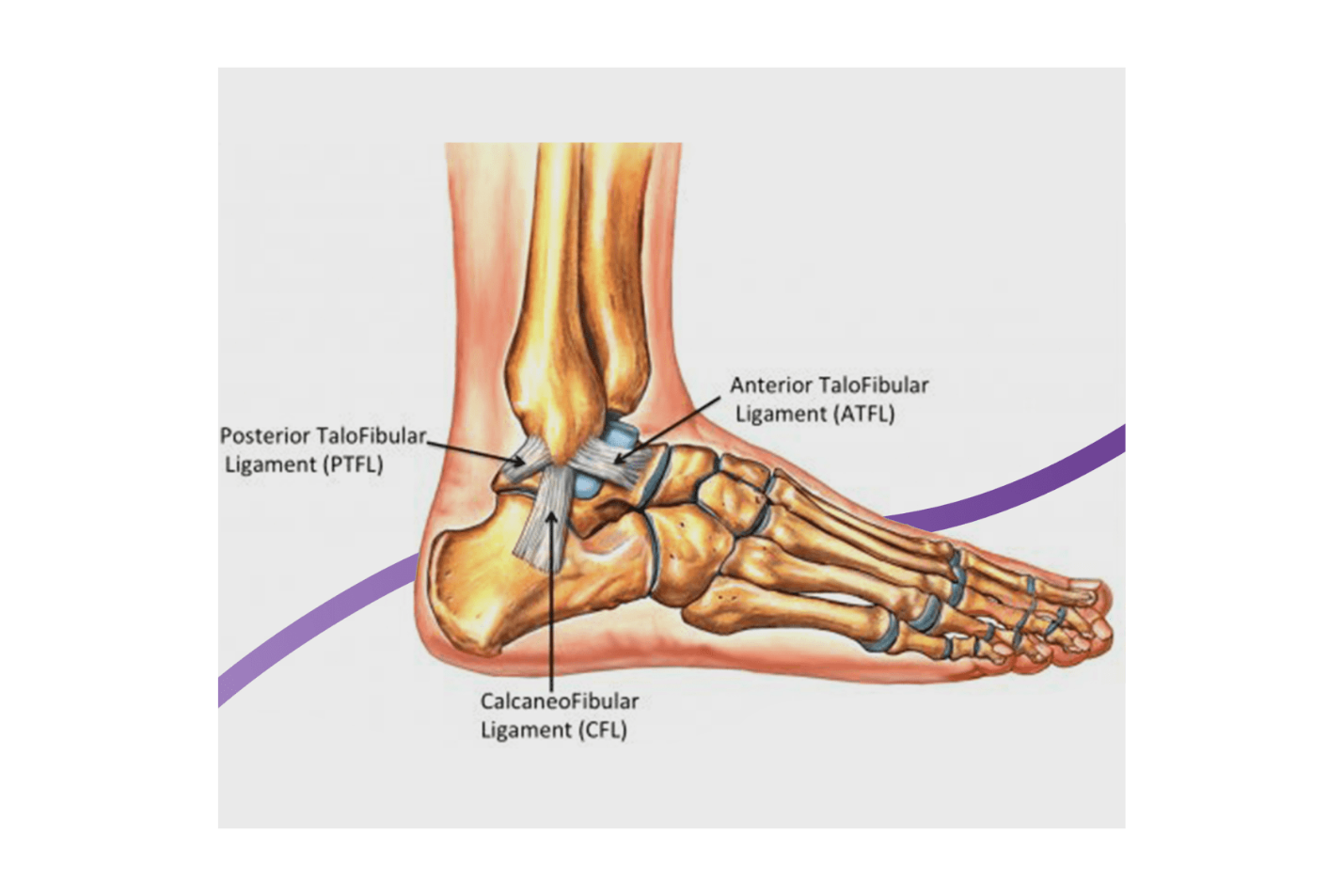
Most ankle rolls involve inversion, where the foot turns inward and stresses the lateral ankle ligaments—primarily:
Anterior talofibular ligament (ATFL)
Calcaneofibular ligament (CFL)
Posterior talofibular ligament (PTFL)
For the average person, this motion exceeds what those ligaments can tolerate, resulting in a sprain or tear.
Why Some People Can Roll Their Ankles Without Pain
In rare cases, individuals develop exceptional ligament tolerance, neuromuscular control, and joint flexibility. This can occur due to:
Long-term proprioceptive training (balance, agility, sports)
Naturally increased ligament laxity
High ankle and foot strength with excellent motor control
Adaptation from years of movement exposure
In these individuals, the ligaments and surrounding muscles are able to absorb and control extreme ranges of motion without triggering injury.
This phenomenon is documented in sports medicine literature, particularly among dancers, gymnasts, martial artists, and certain elite athletes.
Is This the Same as Joint Hypermobility?
Not necessarily.
Some people who tolerate extreme ankle motion have generalized joint hypermobility, but others simply have localized adaptation at the ankle. The key difference is symptoms.
Asymptomatic mobility: No pain, no swelling, no instability → often harmless
Symptomatic instability: Repeated sprains, pain, giving way → needs evaluation
Dr. Sam’s philosophy reflects this distinction well:
“If it ain’t broke, don’t fix it.”
When Rolling Your Ankle Is a Problem
Even if it doesn’t hurt today, repeated ankle rolling can be concerning if it leads to:
Frequent swelling
Pain after activity
A feeling of the ankle “giving out”
Reduced balance or confidence on uneven surfaces
These symptoms may indicate chronic ankle instability, a condition that increases the risk of future injury and long-term joint damage.
Should You Try to Increase Ankle Flexibility on Purpose?
Not without guidance.
While mobility and strength training are beneficial, intentionally forcing extreme ankle positions without proper control can increase injury risk.
Far safer than testing the limits casually is a structured program that includes:
Strengthening
Balance training
Controlled range-of-motion work
Bottom Line
Yes. It is possible for some people to roll their ankles without pain or injury.
But it’s uncommon, highly individual, and depends on years of adaptation.
If your ankle:
Doesn’t hurt
Doesn’t swell
Doesn’t limit your activity
👉 It likely doesn’t need intervention.
But if anything feels off — pain, instability, or repeated injury — that’s your cue to get it checked.
At AM Physicians, we evaluate ankle mobility, stability, and function to determine whether something is truly harmless or quietly setting you up for future problems.
Sources & Further Reading
American Orthopaedic Foot & Ankle Society (AOFAS).
Ankle Sprains and Instability.
https://www.aofas.orgHertel J.
Functional instability following lateral ankle sprain.
Sports Medicine. 2000.Gribble PA, et al.
Evidence review for chronic ankle instability.
Journal of Athletic Training. 2016.Cleveland Clinic.
Ankle Sprain: Causes, Symptoms, and Treatment.
https://my.clevelandclinic.orgNational Institute of Arthritis and Musculoskeletal and Skin Diseases (NIAMS).
Joint Hypermobility.
https://www.niams.nih.gov
