3 More Simple Plantar Fascia Stretches You Can Do Anywhere
Plantar fasciitis is one of the most common causes of heel pain and one of the most frustrating. The good news? Gentle, consistent stretching can make a major difference in reducing pain, improving mobility, and calming irritation in the plantar fascia.
In this week’s reel, Dr. Sam breaks down three easy plantar fascia stretches you can do at home, at work, or even while sitting on the edge of your bed first thing in the morning.
Let’s walk through each stretch step-by-step (and why it works), plus what the research actually says.
Why Stretching Helps Plantar Fasciitis
The plantar fascia connects your heel to your toes. When it becomes irritated or overloaded, the tissue stiffens and causes that classic stabbing heel pain, especially in the morning.
Studies show that plantar-fascia–specific stretching reduces pain and improves function better than calf stretching alone.
▶ Source: DiGiovanni et al., J Bone Joint Surg Am., 2006
Stretching helps by:
Reducing tension in the fascia
Improving flexibility
Stimulating blood flow
Supporting the windlass mechanism, a natural arch-support system triggered when you lift your toes
Stretch #1: Seated Toe Pull (Passive + Active Stretch)
This stretch is simple, highly effective, and perfect as a first-thing-in-the-morning routine.
How to do it:
Sit with your feet flat on the ground.
Using your hand, grab your toes and gently pull them upward.
Hold for 30 seconds (the optimal static stretch time according to multiple studies).
For the active version:
Keep your toes lifted, but push downward into your own hand while resisting with your hand.
Hold another 30 seconds.
Why it works:
This directly lengthens the plantar fascia fibers and activates the windlass mechanism, helping reduce the morning “first step” pain.
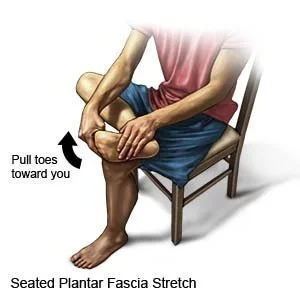
Stretch #2: Cross-Leg Toe Stretch (Modified Toe Pull)
This is the exact same motion as Stretch #1, but more accessible if you can’t reach your toes easily while seated.
How to do it:
Sit and cross one leg over the other.
Grab your toes and pull them upward without lifting the entire foot.
Hold for 30 seconds.
Why it works:
The focused toe extension isolates the plantar fascia.
Stretch #3: Towel or Strap Stretch
If you need something gentle and controlled, this one’s perfect.
How to do it:
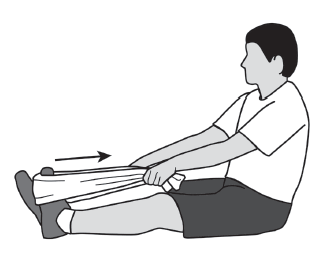
Lying in bed or sitting on the floor, loop a towel, strap, or even one of our compression socks across the ball of your foot.
Pull gently until you feel a stretch in your arch and calf.
Hold for 30 seconds.
Why it works:
This stretch lengthens the plantar fascia and the calf muscles at the same time which is helpful because tight calves increase strain on the heel.
Research Note:
A 2007 randomized study showed that combining plantar fascia stretching with calf stretching improves symptoms more than calf stretching alone.
(Radford et al., BMC Musculoskeletal Disorders, 2007)
Why 30 Seconds Is the Magic Number
Two well-designed studies (Bandy & Irion 1994; Moustafa et al. 2021) found that:
30 seconds increases flexibility
60 seconds does not offer additional benefit
Longer stretches (60s) may temporarily reduce nerve responsiveness
So Dr. Sam’s recommendation remains solid:
👉 Stretch each area for 30 seconds, daily.
When to See a Doctor
If your heel pain:
lasts more than a few weeks
is sharp or worsening
interferes with standing, walking, or exercise
comes with numbness or tingling
…it’s time to get evaluated. Plantar fasciitis is treatable, but sometimes it mimics other issues like nerve irritation, heel spurs, tendon problems, or stress fractures.
Our team at AM Physicians specializes in heel pain, sports injuries, diabetic foot conditions, and full foot-and-ankle care.
Final Thoughts
These stretches are simple, safe, and incredibly effective when done consistently. Try them daily, especially in the morning or before activity.
If you have any foot, ankle, or leg issues, Dr. Sam and the team at AM Physicians are here to help.
